Intermodal Shipping: Rail and Drayage That Gets You Over the Hump
Two modes, one point of contact.
ALG pairs rail linehaul with origin and destination drayage to move your container from dock to door, with one ALG agent managing every handoff.
Block and Brace Yourself for the Best Service You’ve Ever Had
Trucks can't do it alone on every lane, especially once the miles start stacking up and rail becomes the more practical option. Intermodal shipping (inter meaning between, modal meaning modes) pairs rail and truck to move your freight from dock to dock. A drayage carrier trucks your loaded container to a rail ramp, the railroad hauls it across the country, and a second drayage carrier delivers it to your receiver.
Your freight rides in the same intermodal container the entire way; only the equipment underneath it changes at each handoff. The result is truckload-style service at a lower cost, with a fraction of the emissions of running the same miles by truck alone.
One Partner for Every Mode
Intermodal is one piece of what ALG builds for you. As experienced 3PL freight brokers, we pair rail and drayage with truckload, LTL, and heavy haul, and when a shipment needs to leave the country, our international air and ocean cargo services pick up right where the domestic move ends. It's all part of the end-to-end 3PL services we run to keep freight moving, however many modes it takes to get there.
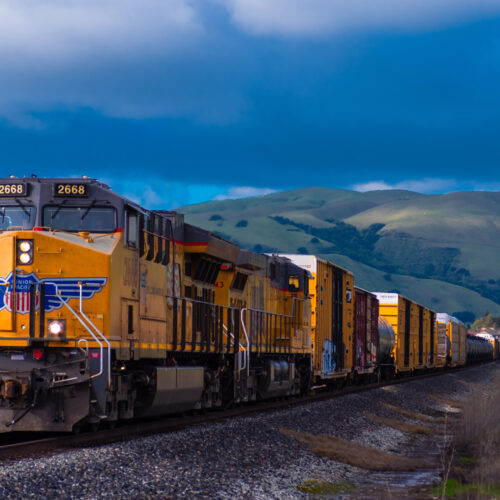
How Intermodal Shipping Works
An intermodal shipment typically moves in three legs: origin drayage, rail linehaul, and destination drayage. Those legs may be handled by one, two, or three carriers, but you shouldn't have to manage multiple relationships to make it happen:
- Origin drayage: A drayage carrier (a trucker who specializes in short hauls to and from rail ramps and ports) delivers an empty 53-foot container to your dock, then returns it loaded to the origin rail terminal.
- Rail linehaul: The railroad moves your container ramp to ramp, covering the long-haul miles where rail's fuel economy does the saving.
- Destination drayage: Destination drayage picks the container off the destination ramp and delivers it to your receiver, whether that's a store, a plant, or a distribution center.
Three legs, one ALG point of contact. We manage the drayage carriers, the rail booking, and the handoffs in between. Booking an intermodal container shipment should feel as simple as booking a truckload.
What an Intermodal Container Looks Like
Once you see how an intermodal container is shipped, dock to ramp to rail to ramp to door, it's easier to spot where it can replace a truckload move on your network.
Most domestic intermodal freight travels in a 53-foot steel container. It's built to stack, to survive the lift on and off a rail car, and to hold up under hundreds of miles of track vibration. International freight typically arrives in 20- or 40-foot ocean containers instead. Once that freight clears the port, a lot of it gets transferred into a 53-foot domestic container for the inland move to a warehouse or distribution center.
Whatever the box, intermodal containers work the same way for the whole trip. Your freight loads once, gets blocked and braced to keep pallets from shifting, and stays sealed until it reaches your receiver. Your cargo isn't unloaded and reloaded at each handoff, which reduces direct cargo handling between modes. Rail movement still requires appropriate packaging and securement, so proper loading, blocking, and bracing remain essential. Each container also carries its own identifying number. Your ALG agent and the railroad can track the exact box your freight is riding in, from the moment it leaves your dock until it arrives.
Where Intermodal Makes Sense
Intermodal isn't the right call for every load, and a good freight broker will tell you when truckload is the better fit. But on the right lane, converting to rail can free up budget and capacity you can put to work elsewhere in your network. A few signs intermodal is the practical choice:
- Long Lanes: Intermodal is typically most competitive on hauls of roughly 700 miles or more, where rail economics outrun the highway.
- Flexible Transit: If your freight has some schedule flexibility, intermodal may be a fit. Transit varies by lane, rail service, cutoffs, ramp dwell, and drayage availability, so ALG compares actual door-to-door transit estimates for each lane.
- Dense, Repeatable Freight: Consistent volume on lanes near major rail ramps converts cleanly from truckload.
- Tight Truckload Markets: When capacity tightens or weather disrupts trucking, rail adds a second, more dependable option.
- Sustainability Goals: If your customers or board are asking about emissions, intermodal is the single biggest lever available in over-the-road freight.
If your freight checks two or three of these boxes, ask your ALG agent for an intermodal rate alongside your truckload quote. There's no cost to compare, and on a lot of lanes the gap is bigger than shippers expect.

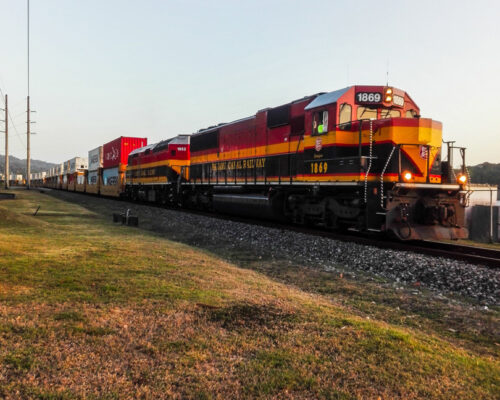
Commodities That Ship Well by Rail
Not every load is a fit for rail, but a wide range of freight rides intermodal every day. Good candidates share a few traits: they can tolerate the transit variability that comes with rail, they ship in volume on a repeatable lane, and they're packaged to travel inside a sealed container without special handling at each stop.
Commodities that move well through intermodal freight transport include:
- Food and Beverage: Packaged, non-perishable goods that ship in volume and on a schedule.
- Paper and Packaging: Bulky, palletized freight that fills a container well.
- Appliances and Electronics: Boxed freight that benefits from staying sealed with less direct handling between modes.
- Construction Materials: Heavy, non-fragile freight that doesn't need an expedited transit time.
- Chemicals: Freight that our team can help classify correctly and route to carriers experienced with the right handling requirements.
Whatever the commodity, every load should be properly loaded, blocked, and braced inside the container to prevent shifting during rail movement, and tracked electronically from pickup to final delivery.
Don't see your product on this list? It may still be worth having a conversation with your ALG agent. They can let you know whether your specific freight is a fit.
Intermodal vs. Full Truckload: Which Fits Your Freight?
Truckload and intermodal both get freight from a shipper's dock to a receiver's door, but they solve different problems. Full truckload is the pick when a shipment is time sensitive or short haul. Intermodal is the right choice when the lane is long, the schedule has a little give, and cost or capacity is the priority.
Most shippers don't have to choose one mode and stick with it. ALG quotes lanes both ways, using the same rate comparison technology behind our full truckload service. You'll see the real cost and estimated door-to-door transit difference before you book.
Many of our customers run a mixed network: truckload for freight that has to move fast, intermodal for freight with schedule flexibility and a lower-cost lane. Over a full year of shipping, that mix is often where the real savings show up, not on any single load.
Keeping Visibility Across Every Leg
One of the biggest hesitations shippers have about intermodal is losing sight of freight once it leaves the truck and goes onto a train. Multiple legs and handoffs mean multiple places for a shipment to go quiet if nobody is watching all of them at once.
That's why ALG tracks your intermodal container shipment at every leg, not just at pickup and delivery. Your agent can tell you where your container sits at any point in the move: rolling on drayage, sitting at a rail ramp, or moving cross country by train. You get one ALG contact for updates, no matter how many legs or handoffs happen behind the scenes.
The ALG Difference for Intermodal Freight Shipping
Moving freight across multiple legs and handoffs takes coordination, and that's where ALG earns its keep:
- Vetted Carrier Network: Every drayage carrier and rail partner in our network is vetted before your freight ever touches their equipment.
- Dual-Layer Insurance: Your freight is covered at no added cost, on every leg of the move, from origin drayage through rail linehaul to final delivery.
- U.S.-Based Support: A dedicated ALG agent, not a call center, answers when you call. We don't outsource customer service overseas.
- Freight Class and HAZMAT Know-How: Our team classifies your freight correctly the first time and knows which carriers can handle regulated commodities.
- API-Connected Rates: Compare intermodal and truckload pricing on your lanes without picking up the phone, then call your agent when you're ready to book.
We've been recognized as a Top 100 3PL Provider by Inbound Logistics, and it's this kind of hands-on coordination across every mode that got us there.
Why Choose ALG?

Dedicated Agents
Partner with ALG for your Intermodal needs and you'll get a dedicated pro to contact at any time.

Tap into Our Network
We've built strong carrier and rail relationships that give you capacity and competitive pricing.

Affordable + Sustainable
Shipping Intermodal will save you money and is much more environmentally friendly. If Intermodal makes sense for your business, let us get you on the rails.
Intermodal Shipping FAQ

READY TO WORK WITH ALG?
Create an account today and let's get your product moving.
One stop shop for all of your freight needs.
Explore what we can do for you.