Heavy Haul Trucking: Oversize and Overweight Load Experts
Have an oversized or unique load? ALG has you covered. Our heavy haul trucking experts handle the loads that don't fit in a standard trailer or on a standard route, such as over-dimensional machinery, overweight equipment, and superloads that demand permits, pilot cars, and precise planning. From the first measurement to final delivery, our team builds heavy haul solutions so you don't have to.
What Qualifies as Heavy Haul?
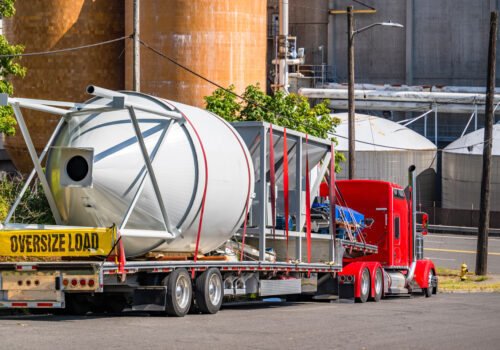
A load becomes heavy haul when it exceeds the legal limits for standard trucking: oversize, overweight, or heavy freight that a standard flatbed or dry van can't handle safely. In most states, that means anything wider than 8'6", taller than 13'6" to 14', longer than the legal trailer limit, or heavier than 80,000 pounds gross vehicle weight. Loads beyond those limits are classified as oversize, overweight, or both, and require state permits to move. At the extreme end, superloads (dimensions or weights far beyond standard permit thresholds, which vary by state) require engineered route studies and individual state approval.
Oversize and overweight are related problems, but they aren't the same problem. Oversize loads are about clearance, avoiding bridges, power lines, turn radii, and traffic, which is why they often require pilot cars and daylight-only travel. Overweight loads are about the road itself, distributing weight across enough axles to protect pavement and bridges, which drives which trailer gets used. Plenty of heavy haul loads are both oversize and overweight at once, and ALG plans for each constraint on its own rather than treating them as one problem.
Our Dedicated Experts Are Here to Lighten the Load
Be it a density, dimension, or destination challenge, or a combination of all three, the ALG team is eager to help from beginning to end.
Access to Equipment
No matter the shipping challenge, ALG will deliver. We can get you access to the right equipment at the right price. From double-drop to self-propelled modular transport, your challenge is our solution.

Unmatched Support
Our staff is highly trained, professional and eager to help. We have a proven track record of success and our happy customers keep coming back for more! Give us a shot today and you won't regret it.
Heavy Haul Equipment: Matching the Trailer to the Load
No two heavy haul shipments call for the same setup. Our heavy haul equipment includes double-drop, RGN, stretch RGN, lowboy, and self-propelled modular transport trailers, matched to your freight's dimensions and weight.
- Double-drop trailers: Lower the deck between the gooseneck and rear wheels, buying extra height clearance for tall equipment that would clip bridges on a standard flatbed.
- Removable gooseneck (RGN) trailers: Detach at the front so equipment can drive straight onto the deck instead of being lifted, which is often the only practical way to load tracked or wheeled machinery.
- Stretch RGNs and stretch double-drops (extendable trailers): Extend the deck length for freight that's long as well as tall or heavy, like wind turbine blades or long structural steel.
- Lowboy trailers: Sit close to the ground for maximum total payload capacity, common for construction equipment and industrial machinery.
- Self-propelled modular transporters (SPMT): Handle the most extreme superloads, running on distributed, independently steerable axles instead of a conventional trailer.
What Moves on a Heavy Haul Trailer
Heavy haul freight tends to fall into a few recognizable categories:
- Energy and power: Wind turbine components, transformers, generators, and other utility-scale equipment
- Construction and industrial: Cranes, crawlers, excavators, and fabricated equipment too large to break down for standard shipping
- Manufactured structures: Modular buildings, prefabricated houses, and large tanks or vessels
- Specialized and one-off loads: Anything that doesn't fit a category but still needs an engineered move, boilers, industrial presses, aircraft components, and similar freight
The heavy haul freight moved in America includes turbines, houses, huge power transformers, giant boilers, crawlers and cranes, and plenty of equipment that doesn't fit a tidy category at all. If you're not sure which bucket your shipment falls into, send us the dimensions and weight and we'll tell you what it takes to keep your supply chain moving.
Heavy Haul or Flatbed? How to Tell the Difference
Not every oversized-looking load is actually heavy haul. A double-drop or RGN trailer is technically flatbed equipment, and plenty of tall or awkward freight moves on reliable flatbed transport without ever needing a permit. The line is the legal limit: if your load stays within 8'6" wide, under roughly 13'6" tall, and under 80,000 pounds gross, standard flatbed equipment and routing handle it fine. Cross any of those thresholds and you're in heavy haul territory, with permits, route surveys, and possibly escorts involved.
When you're not sure which side of that line your freight falls on, send us the specs before you book. We'll tell you straight whether you need a flatbed or heavy haul service, rather than quoting the more expensive option by default.
Why Ship Heavy Haul With ALG
Heavy haul freight leaves no room for a provider who's guessing. As your heavy haul provider, ALG builds heavy haul solutions around your freight, not the other way around. When you compare heavy haul trucking companies, a few things separate the good ones from the rest:
- Vetted carriers, not a cold list: Authority, insurance, safety record, and hands-on experience with oversize and overweight freight, checked before your load ever gets near their deck
- Two layers of insurance: Carrier cargo coverage plus ALG's contingent policy, on every load, at no additional cost
- Permits and escorts handled end to end: Filed and scheduled state by state as part of the move, not left for you to sort out
- A dedicated agent, not a call center: One named contact who knows your shipment and answers when you call
- One partner across every mode: Heavy haul services today, palletized freight in an enclosed trailer next week, a dedicated truck running full truckload freight services the week after that
How Our Heavy Haul Process Works
No two heavy haul moves follow the exact same path, but here's how ALG handles one from the first call to final offload:
- Load assessment: We confirm exact dimensions, weight, and loading requirements, the numbers every permit depends on.
- Equipment and carrier match: The right trailer configuration, paired with a vetted heavy haul carrier who has handled loads like yours before.
- Route survey and permits: Clearances get verified, permits filed in every state the load crosses, and escorts scheduled where required.
- Transit with live updates: Active monitoring and proactive communication from pickup through delivery. You're always in the loop.
- Delivery and offload coordination: Arrival windows aligned with your crane, rigging, or site crew, so nobody's standing around waiting.
Heavy Haul Trucking FAQ
What qualifies as an oversize or heavy haul load?
In most states, anything wider than 8'6", taller than 13'6" to 14', or heavier than 80,000 pounds gross requires oversize or overweight permits. Individual pieces over roughly 55,000 pounds typically need multi-axle heavy haul equipment. If you're unsure, send us the dimensions and we'll tell you.
Do I need permits in every state my load crosses?
Yes. Oversize and overweight permits are issued state by state, each with its own rules, fees, escort requirements, and travel restrictions. ALG secures all of them as part of every heavy haul move.
What is a pilot car?
A pilot car (escort vehicle) travels ahead of or behind an oversize load to warn traffic, check clearances (sometimes with a height pole), and help the driver navigate. States require them above certain widths, heights, and lengths.
How much does heavy haul trucking cost?
Cost depends on dimensions, weight, distance, equipment type, total payload capacity, permit and escort fees, and route complexity. Because these variables interact, heavy haul is quoted per load. ALG provides fast, transparent quotes with permits and escorts included, no surprise line items.
How far in advance should I book a heavy haul shipment?
The more notice you give heavy haul trucking companies, the better. Standard permits are often issued within days, but superloads requiring engineered route studies can take weeks. Involve ALG early and we'll build the timeline backward from your required delivery date.
READY TO WORK WITH ALG?
Create an account today and let's get your product moving.
One stop shop for all of your freight needs.
Explore what we can do for you.